Beginner Photography Gear: What You Actually Need
The most common beginner mistake is buying too much too early. This guide explains what matters in a first camera and lens, which accessories are worth buying first, and what can wait until you know what you like to photograph.
This guide contains Amazon affiliate links, marked “(Amazon)”. If you buy through them, this site may earn a commission at no extra cost to you. Suggestions are based on research, not hands-on testing. Read the disclosure.
Start with the camera you have
Modern phones are capable cameras in good light. If you are not sure photography will stick, spend a few weeks learning composition and light with your phone first. You will learn what frustrates you — usually low-light performance, zoom range or blurred backgrounds — and that tells you what to buy.
When a dedicated camera makes sense
- You photograph moving subjects (children, pets, sports) and need faster focusing.
- You want real optical zoom or a background-blurring portrait lens.
- You shoot indoors or in the evening a lot.
- You want to learn manual exposure with physical controls.
Choosing a first camera
Almost every interchangeable-lens camera sold today is capable of excellent images; differences at the entry level are smaller than marketing suggests. Features that genuinely matter to beginners:
- Mirrorless vs DSLR. New development has largely moved to mirrorless systems. A used DSLR can still be a good-value way to learn, but check that lenses for the system are still easy to buy.
- Lens system. You are buying into a system. Look at the range and price of lenses available, including used and third-party options.
- Handling. If possible, hold cameras before you buy. Grip size and button layout affect how often you take the camera out.
- Autofocus with subject detection helps a lot with people, pets and moving subjects.
- Sensor size. Larger sensors help in low light and with background blur, but add cost, size and lens weight. APS-C sensors are a sensible middle ground for most beginners.
When is a more expensive body unnecessary? If you mostly photograph family, travel and landscapes in reasonable light, an entry-level body with a good lens will usually outperform an expensive body with a kit lens.
Browse beginner mirrorless camera kits
Your first lens upgrade
Kit zoom lenses are versatile but relatively slow (they let in less light). For many beginners, the single most noticeable upgrade is a fast prime lens — a "nifty fifty" (50mm f/1.8) or its equivalent for your sensor size. It is usually inexpensive, small and makes portraits with blurred backgrounds much easier.
Make sure any lens you consider fits your camera mount.
Accessories to buy first
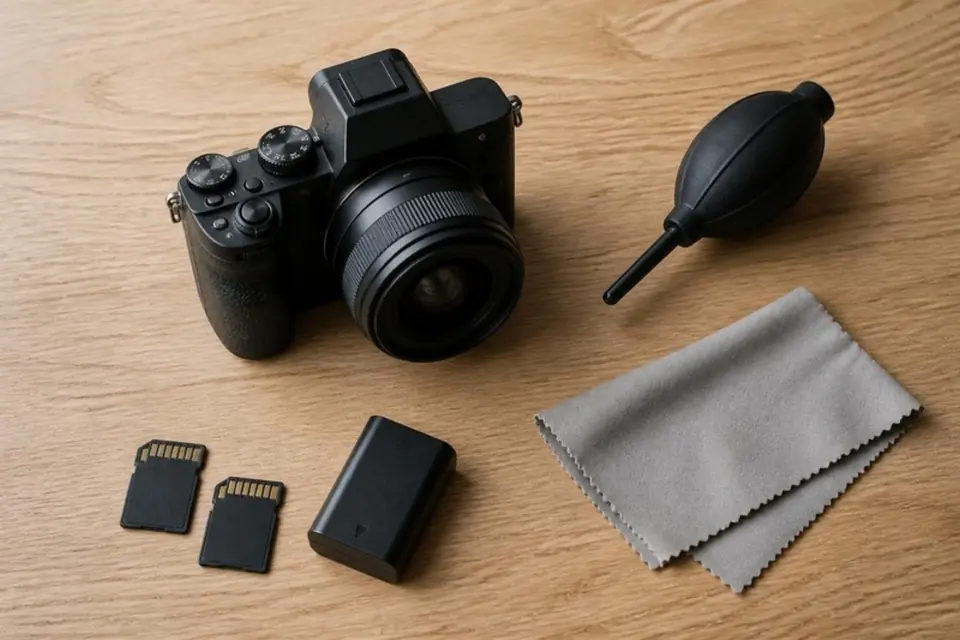
A spare battery
Mirrorless cameras in particular get through batteries quickly. Manufacturer batteries cost more; reputable third-party batteries are a common alternative, but check reviews for your model.
Reliable memory cards
Buy from well-known brands and trusted sellers — counterfeit cards are a real problem. Two smaller cards are safer than one huge card. See photography accessories for speed ratings.
A padded bag or insert
A camera bag does not need to look like a camera bag. A padded insert inside a backpack you already own is often enough.
Lens cloth and blower
Fingerprints and dust spots are the most common causes of soft images. A microfiber cloth and a rubber air blower cost very little.
What can wait
- A tripod — essential for landscapes at dusk, long exposures and self-portraits, but not for everyday shooting.
- Filters — polarizers and ND filters are useful later; "protective" UV filters are optional.
- Flash and lighting — learn natural light first; a single speedlight or LED panel is a good second-year purchase.
- Paid editing software — free and bundled editors cover the basics while you learn.
Common beginner mistakes
- Buying a high-end body and keeping the kit lens.
- Buying several lenses before knowing which focal lengths you actually use. Check your photos' metadata after a few months.
- Buying the cheapest unbranded memory cards.
- Never backing up photos. Keep at least two copies, one of them off the computer.
Alternatives worth considering
- Used and refurbished gear from reputable dealers can stretch a budget considerably.
- Premium compact cameras suit travelers who want better quality than a phone without changing lenses.
- Renting a lens for a weekend is an inexpensive way to test before buying.